
Diamond Buying Guide
It is the weight unit used for weighing gemstones.
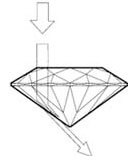
1 carat is 0.20 g. In other words, 1 g is equal to 5 carats. As the carat weight increases, the unit price of the stone increases proportionally. A diamond with a lower carat weight can look larger than a diamond with a higher carat weight if it has a better cut. This is true because when a diamond is cut correctly, the maximum amount of light is reflected from the top of the diamond, making it look larger.
CutThe cut of a diamond has the greatest effect on its brilliance and sparkle.
The cut of a diamond is one of its most important features, and it has the greatest impact on the beauty of the diamond. Well-cut diamonds are valuable and unique as they reflect the most light compared to others.


Clarity refers to the absence of imperfections and blemishes in a diamond. Almost all diamonds have minor imperfections; however, the fewer the imperfections, the more valuable the diamond.

Diamonds are valued by how colorless they are; therefore, the less color a diamond has, the higher its value. However, colored diamonds (such as yellow and black diamonds) are an exception to this rule.

- D, E, F:
- Colorless
- G, H, I, J:
- Near Colorless
- K, L, M:
- Faint
- N, O, P, Q, R:
- Very Light
- S, T, U, V, W, X, Y, Z:
- Light
After cut, the color of a diamond is considered to be the second most important feature in the diamond selection process. This is true because the human eye first perceives the sparkle of a diamond and then its color. It is also important to understand that as the diamond size increases, the color becomes more pronounced.